


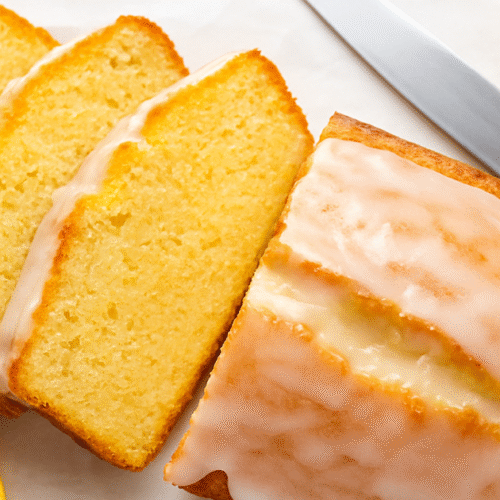
Every spring, I find myself craving bright, citrusy desserts, and this lemon pound cake recipe has become my go-to. The first time I baked it, the smell of fresh lemons filled the kitchen, and I couldn’t resist sneaking a slice while it was still warm (quality control, right?). It’s rich, moist, and perfectly balanced between sweet and tangy.
Whether you bake it in a bundt pan for a family gathering or in loaf pans to share with neighbors, this pound cake never disappoints. In this guide, I’ll walk you through the ingredients, step-by-step method, pro tips, and fun variations. You’ll learn exactly how to cream butter and sugar until fluffy, when to add your dry ingredients, and how to make that glossy lemon glaze that ties it all together.
Why You’ll Love This Recipe
- Moist and buttery: Sour cream keeps the crumb tender without being heavy.
- Fresh lemon flavor: Lemon zest and juice make this cake bright and tangy.
- Versatile bake: Works beautifully in a bundt pan or loaf pans.
- Make-ahead friendly: Stays fresh for days and even freezes well.
- Crowd-pleaser: Perfect for brunch, picnics, or as an afternoon treat with tea.
If you’ve been looking for a classic pound cake recipe with a citrus twist, this one’s for you.
Ingredients You’ll Need
For the cake batter:
- 1 cup (2 sticks) unsalted butter, room temperature – softened for easy creaming.
- 2 cups granulated sugar – creamed with butter until fluffy.
- 4 large eggs, room temperature – adds richness and structure.
- 3 cups all-purpose flour – the base of your cake.
- 1/2 tsp baking soda – for a little lift.
- 1/2 tsp salt – balances the sweetness.
- 1 cup sour cream, room temperature – keeps the cake moist.
- 1/4 cup fresh lemon juice – brightens the flavor.
- 1 tbsp lemon zest – finely grated from fresh lemons.
- 1 tsp vanilla extract – rounds out the flavor.
For the lemon glaze:
- 1 cup powdered sugar – sifted for smoothness.
- 2–3 tbsp fresh lemon juice – whisked in until pourable.
Ingredient Substitutions
- Butter: Swap with margarine, but flavor won’t be as rich.
- Sour cream: Use Greek yogurt for a tangy twist.
- Flour: A gluten-free 1:1 blend works well.
- Sugar: Try coconut sugar for a deeper flavor, though color will be darker.
- Lemon juice: Bottled works in a pinch, but fresh lemon juice gives the best flavor.
How to Make Lemon Pound Cake Recipe
- Prep your oven and pan: Preheat oven to 325°F. Grease and flour a bundt pan (or two 9×5-inch loaf pans).
- Cream butter and sugar: In a large bowl, beat the butter and sugar together until light and fluffy (3–4 minutes). This step gives the cake its signature tender texture.
- Add eggs: Mix in eggs one at a time, beating well after each addition. Scrape down the bowl as needed.
- Combine dry ingredients: In a separate bowl, whisk together flour, baking soda, and salt.
- Mix wet ingredients: In another bowl, stir together sour cream, lemon juice, lemon zest, and vanilla extract.
- Build the batter: Alternate adding dry ingredients and sour cream mixture into the butter-sugar mixture, beginning and ending with flour. Mix just until combined—don’t overbeat.
- Bake the cakes: Pour batter into prepared pan(s). Smooth the top. Bake for 60–70 minutes for a bundt pan (or 50–55 minutes for loaf pans), until a toothpick inserted in the center comes out clean.
- Cool completely: Let the cake rest in the pan for 10–15 minutes before turning it out onto a wire rack. Cool completely before glazing.
- Glaze and serve: Whisk powdered sugar with lemon juice until smooth. Drizzle over the cooled cake.

Expert Tips & Mistakes to Avoid
- Room temperature ingredients are key. Cold butter and eggs won’t blend properly.
- Cream thoroughly. Butter and sugar should look pale and fluffy before adding eggs.
- Don’t overmix the batter. It can make the cake dense.
- Test for doneness early. Ovens vary; check at 55 minutes to avoid overbaking.
- Cool completely before glazing. Warm cake will melt the glaze.
Variations & Add-Ons
- Lemon poppy seed pound cake: Add 2 tbsp poppy seeds to the batter.
- Glazed orange pound cake: Swap lemon zest/juice for orange.
- Almond lemon twist: Add 1/2 tsp almond extract.
- Vegan version: Use plant-based butter, flax eggs, and coconut cream in place of sour cream.
- Mini loaves: Perfect for gifting—adjust bake time to 35–40 minutes.
Serving Suggestions
- Dust with powdered sugar instead of glaze for a simple finish.
- Serve with fresh berries and whipped cream.
- Pair with hot tea, iced coffee, or lemonade for a refreshing treat.
- Slice thick and toast lightly—delicious with a pat of butter.
Storage & Reheating
- Counter: Store at room temperature in an airtight container for up to 3 days.
- Fridge: Keeps 5–6 days, tightly wrapped.
- Freezer: Wrap slices individually and freeze for up to 2 months. Thaw at room temp.
- Reheat: Warm slices in the microwave for 10–15 seconds or in a 300°F oven for 5 minutes.
Nutrition Information (per slice, 12 servings)
- Calories: ~370
- Protein: 5g
- Fat: 17g
- Carbs: 49g
- Sugar: 31g
- Sodium: 160mg
- Fiber: 1g
Quick-Glance Times
- Prep Time: 20 minutes
- Cook Time: 60–70 minutes
- Total Time: ~90 minutes
Frequently Asked Questions
Can I use bottled lemon juice for lemon pound cake?
Fresh lemon juice gives the best flavor, but bottled 100% juice can be used if fresh lemons aren’t available.
How do I keep lemon pound cake moist?
Use sour cream in the batter, avoid overbaking, and store tightly wrapped to lock in moisture.
Can I freeze lemon pound cake?
Yes. Wrap slices or the whole cake tightly and freeze for up to 2 months. Thaw at room temperature before serving.
What’s the best pan for lemon pound cake?
A bundt pan creates a beautiful presentation, but two standard loaf pans work just as well for this recipe.
Why did my pound cake sink in the middle?
The cake may have been underbaked, the oven door opened too soon, or the batter was overmixed causing collapse.
Can I double the lemon pound cake recipe?
Yes. For best results, bake in two separate pans rather than one oversized pan to ensure even cooking.
Conclusion
This lemon pound cake recipe is everything I love in a homemade dessert: buttery, tender, and bursting with lemon flavor. It’s simple enough for a weekday bake but elegant enough for celebrations. Once you master the basics—creaming butter and sugar, adding room temperature ingredients, and letting it cool completely—you’ll have a cake that’s foolproof and delicious every single time.
So grab some fresh lemons and your favorite bundt pan, and give this recipe a try. And when you do, come back and let me know—did you glaze it, dust with powdered sugar, or pile on fresh berries?
lemon pound cake recipe
Ingredients
- For the cake batter:
- 1 cup 2 sticks unsalted butter, room temperature – softened for easy creaming.
- 2 cups granulated sugar – creamed with butter until fluffy.
- 4 large eggs room temperature – adds richness and structure.
- 3 cups all-purpose flour – the base of your cake.
- 1/2 tsp baking soda – for a little lift.
- 1/2 tsp salt – balances the sweetness.
- 1 cup sour cream room temperature – keeps the cake moist.
- 1/4 cup fresh lemon juice – brightens the flavor.
- 1 tbsp lemon zest – finely grated from fresh lemons.
- 1 tsp vanilla extract – rounds out the flavor.
- For the lemon glaze:
- 1 cup powdered sugar – sifted for smoothness.
- 2–3 tbsp fresh lemon juice – whisked in until pourable.
Instructions
- Prep your oven and pan: Preheat oven to 325°F. Grease and flour a bundt pan (or two 9×5-inch loaf pans).
- Cream butter and sugar: In a large bowl, beat the butter and sugar together until light and fluffy (3–4 minutes). This step gives the cake its signature tender texture.
- Add eggs: Mix in eggs one at a time, beating well after each addition. Scrape down the bowl as needed.
- Combine dry ingredients: In a separate bowl, whisk together flour, baking soda, and salt.
- Mix wet ingredients: In another bowl, stir together sour cream, lemon juice, lemon zest, and vanilla extract.
- Build the batter: Alternate adding dry ingredients and sour cream mixture into the butter-sugar mixture, beginning and ending with flour. Mix just until combined—don’t overbeat.
- Bake the cakes: Pour batter into prepared pan(s). Smooth the top. Bake for 60–70 minutes for a bundt pan (or 50–55 minutes for loaf pans), until a toothpick inserted in the center comes out clean.
- Cool completely: Let the cake rest in the pan for 10–15 minutes before turning it out onto a wire rack. Cool completely before glazing.
- Glaze and serve: Whisk powdered sugar with lemon juice until smooth. Drizzle over the cooled cake.
Notes
- Room temperature ingredients are key. Cold butter and eggs won’t blend properly.
- Cream thoroughly. Butter and sugar should look pale and fluffy before adding eggs.
- Don’t overmix the batter. It can make the cake dense.
- Test for doneness early. Ovens vary; check at 55 minutes to avoid overbaking.
- Cool completely before glazing. Warm cake will melt the glaze.