

Have you ever craved creamy, flavorful hummus but realized you didn’t have tahini in your pantry? Don’t worry—I’ve been there too. That’s exactly why I created this hummus recipe without tahini. It’s just as smooth, rich, and satisfying as the traditional version, but it skips the sesame paste completely.
When I first tried making hummus at home years ago, I didn’t have tahini on hand and thought it was a deal-breaker. But after experimenting in my kitchen, I found that you can achieve the same nutty, creamy texture with everyday ingredients you probably already have—like olive oil, garlic, and lemon juice.
In this guide, I’ll walk you step-by-step through making the best homemade hummus without tahini. You’ll learn the simple ingredients you need, how to get that silky smooth texture, variations you can try, and tips to make your hummus taste restaurant-quality every single time. Whether you’re scooping it up with pita bread, spreading it on sandwiches, or serving it as a healthy snack, this recipe is about to become your go-to.
Why You’ll Love This Hummus Recipe Without Tahini
- No tahini needed – Perfect for anyone who doesn’t have tahini on hand, can’t find it at the grocery store, or simply doesn’t love its flavor.
- Made with simple pantry ingredients – You probably already have chickpeas, olive oil, garlic, and lemon juice at home.
- Quick and easy – With a food processor, you can whip up this dip in less than 10 minutes.
- Creamy and versatile – Use it as a dip, spread, or healthy side. The smooth, rich texture pairs with almost anything.
- Kid-friendly and budget-friendly – A nutritious snack the whole family will enjoy without spending much.
If you’ve been searching for a hummus recipe without tahini that doesn’t sacrifice flavor, this is the one.
Ingredients You’ll Need
Here’s exactly what you’ll need to make this delicious tahini-free hummus:
- 1 can (15 oz) chickpeas (garbanzo beans) – drained and rinsed. For even creamier hummus, peel the skins off.
- 3 tablespoons extra virgin olive oil – adds richness and smooth texture.
- 2–3 tablespoons fresh lemon juice – balances the flavors and adds brightness.
- 2 cloves garlic, minced – for a sharp, savory kick.
- 3–4 tablespoons water or aquafaba (the liquid from chickpeas) – helps thin out the hummus for creaminess.
- ½ teaspoon ground cumin – optional but highly recommended for warmth.
- ½ teaspoon kosher salt (or to taste)
- Freshly ground black pepper – just a pinch for balance.
- Paprika or smoked paprika (for garnish)
- Olive oil drizzle (for serving)
Ingredient Substitutions
One of the best things about hummus is how adaptable it is. Here are some swaps you can try:
- Chickpeas substitute: Try cannellini beans or navy beans for a slightly different flavor and creamier texture.
- Olive oil substitute: Avocado oil works well for a lighter, neutral flavor.
- Garlic substitute: Use roasted garlic for a sweeter, mellow flavor instead of raw.
- Lemon juice substitute: Apple cider vinegar or red wine vinegar can add acidity if you’re out of lemons.
- Cumin substitute: Smoked paprika adds depth, while coriander adds citrusy notes.
How to Make Hummus Without Tahini
This recipe is quick and foolproof. You’ll only need a food processor or high-speed blender.
- Prep your chickpeas (5 minutes):
- Drain and rinse canned chickpeas.
- For extra creamy hummus, peel the skins off by gently rubbing them between your fingers or in a clean kitchen towel.
- Blend the aromatics (1–2 minutes):
- Add garlic, lemon juice, and salt to the food processor. Blend until garlic is finely chopped.
- Add chickpeas and seasonings (2 minutes):
- Toss in the chickpeas, olive oil, cumin, and black pepper. Pulse a few times to break everything down.
- Stream in water (2–3 minutes):
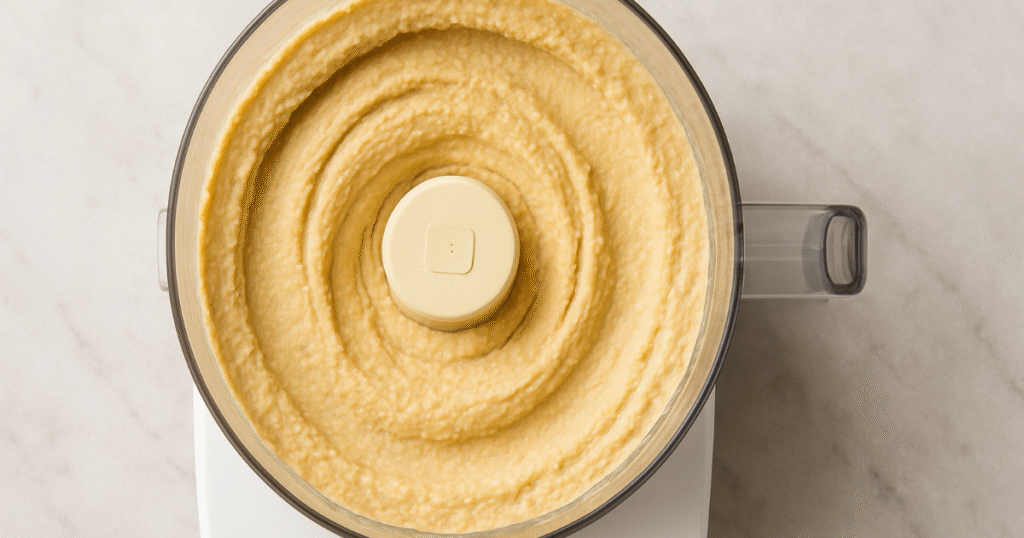
- With the food processor running, slowly drizzle in 3–4 tablespoons of water (or aquafaba). Keep blending until the hummus is smooth and creamy.
- Taste and adjust (1 minute):
- Add more salt, lemon juice, or olive oil if needed.
- Serve (1 minute):
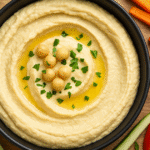
- Spoon into a serving bowl, drizzle with olive oil, sprinkle with paprika, and enjoy with pita bread, veggies, or crackers.

Expert Tips and Common Mistakes to Avoid
- Peel the chickpeas: It’s a little extra work, but it makes a huge difference for creaminess.
- Don’t skip the water (or aquafaba): It’s the key to getting that whipped, airy texture.
- Balance is everything: Too much garlic can overpower the hummus. Start small, taste, and adjust.
- Use fresh lemon juice: Bottled lemon juice doesn’t have the same brightness.
- Blend long enough: Give your food processor at least 2–3 minutes to fully whip everything together.
Variations & Add-Ons
Once you master the base hummus recipe without tahini, you can get creative:
- Roasted Red Pepper Hummus: Blend in 1 roasted red bell pepper for a smoky, sweet twist.
- Spicy Hummus: Add ½–1 teaspoon cayenne pepper or blend in roasted jalapeños.
- Avocado Hummus: Mix in one ripe avocado for extra creaminess and a fresh green color.
- Herb Hummus: Add fresh parsley, basil, or cilantro for a herby flavor.
- Nutty Hummus (without tahini): Blend in 2 tablespoons of cashew butter or peanut butter for richness.
Serving Suggestions
- Classic dip: Serve with warm pita bread, tortilla chips, or pita chips.
- Fresh veggies: Pair with carrot sticks, cucumber slices, bell peppers, or celery.
- Sandwich spread: Use hummus as a creamy, healthy alternative to mayo on wraps and sandwiches.
- Buddha bowls: Add a dollop of hummus to grain bowls for flavor and protein.
- Snack board: Serve on a mezze platter with olives, cheese, and nuts.
Storage & Reheating
- Refrigerator: Store hummus in an airtight container in the fridge for up to 5 days.
- Freezer: Freeze in small portions for up to 2 months. Thaw overnight in the fridge before serving.
- Reheating (optional): Hummus is typically served cold or at room temperature, but if you prefer it warm, heat gently in the microwave for 20–30 seconds and stir well.
Nutrition Information (per serving, about ¼ cup)
- Calories: 130
- Protein: 4g
- Carbohydrates: 12g
- Fat: 7g
- Fiber: 3g
- Sugar: 1g
- Sodium: 180mg
Prep, Cook, and Total Time
- Prep Time: 10 minutes
- Cook Time: 0 minutes
- Total Time: 10 minutes
Frequently Asked Questions
Can I make hummus without tahini taste authentic?
Yes! Olive oil, garlic, and lemon juice give hummus without tahini a rich, balanced flavor that’s just as delicious as the traditional version.
What can I use instead of tahini in hummus?
You can substitute tahini with cashew butter, peanut butter, sunflower seed butter, or simply omit it and add extra olive oil for creaminess.
Do I need to peel the chickpeas?
Peeling is optional, but it makes the hummus smoother. If you’re short on time, skip it, but for the creamiest texture, peel them.
How long does homemade hummus last?
Stored in an airtight container, homemade hummus lasts up to 5 days in the refrigerator. Freeze for longer storage.
Can I make hummus without a food processor?
Yes, though it won’t be as smooth. Mash the chickpeas with a potato masher and stir in the remaining ingredients for a chunky version.
Conclusion
This hummus recipe without tahini proves you don’t need fancy ingredients to enjoy a creamy, delicious dip at home. With just chickpeas, olive oil, garlic, and lemon, you can whip up a batch in minutes that tastes every bit as satisfying as the traditional version.
Next time you’re craving hummus, don’t stress if tahini is missing from your pantry—just try this recipe, and I promise you’ll be hooked.
👉 If you make this hummus, let me know in the comments below! Did you add a twist—like roasted peppers or herbs? I’d love to hear how you made it your own.

hummus recipe without tahini
Ingredients
- 1 can 15 oz chickpeas (garbanzo beans), drained and rinsed
- 3 tablespoons extra virgin olive oil
- 2–3 tablespoons fresh lemon juice
- 2 cloves garlic minced
- 3–4 tablespoons water or aquafaba the liquid from chickpeas
- ½ teaspoon ground cumin optional but recommended
- ½ teaspoon kosher salt or to taste
- Freshly ground black pepper just a pinch
- Paprika or smoked paprika for garnish
- Olive oil drizzle for serving
Instructions
- Prep your chickpeas (5 minutes): Drain and rinse canned chickpeas. For extra creamy hummus, peel the skins off by gently rubbing them between your fingers or in a clean kitchen towel.
- Blend the aromatics (1–2 minutes): Add garlic, lemon juice, and salt to the food processor. Blend until garlic is finely chopped.
- Add chickpeas and seasonings (2 minutes): Toss in the chickpeas, olive oil, cumin, and black pepper. Pulse a few times to break everything down.
- Stream in water (2–3 minutes): With the food processor running, slowly drizzle in 3–4 tablespoons of water (or aquafaba). Keep blending until the hummus is smooth and creamy.
- Taste and adjust (1 minute): Add more salt, lemon juice, or olive oil if needed.
- Serve (1 minute): Spoon into a serving bowl, drizzle with olive oil, sprinkle with paprika, and enjoy with pita bread, veggies, or crackers.
Notes
- For extra creamy hummus, peel the chickpeas before blending.
- Use aquafaba (the liquid from canned chickpeas) instead of water for even smoother texture.
- Adjust garlic to your preference—raw garlic is strong, roasted garlic gives a sweeter, mellow flavor.
- Store hummus in an airtight container in the refrigerator for up to 5 days, or freeze for up to 2 months.
- Great for dipping, spreading on sandwiches, or adding to grain bowls.