

If you’ve never tried a German pancake recipe before, let me set the scene: a giant, puffy “pancake” that rises dramatically in the oven, with golden, crispy edges and a soft, custard-like center. It looks impressive, but here’s the secret—it’s actually one of the easiest pancake recipes you’ll ever make.
The first time I baked one, my kids thought I had pulled a magic trick. It puffed up like a balloon, and when I dusted it with powdered sugar and added fresh fruit, they couldn’t stop ooh-ing and ahh-ing. These oven-baked pancakes are also called Dutch babies, and they’re perfect for lazy weekends, holidays, or when you just want breakfast that feels extra special without extra work.
In this guide, I’ll share everything you need: the ingredients, step-by-step instructions, smart tips, substitutions, and fun variations. By the end, you’ll feel confident pouring the mixture into your baking dish and watching the magic happen in your own oven.
Why You’ll Love This Recipe
- Easy and foolproof: Just blend, pour, and bake—no flipping required.
- Show-stopping look: The pancake puffs up beautifully in the oven.
- Family-friendly: Pairs with toppings everyone loves—powdered sugar, maple syrup, or fresh fruit.
- Versatile: Works for breakfast, brunch, or even dessert.
- Better than pancakes: A Dutch baby gives you crispy, custardy textures regular pancakes can’t match.
Ingredients You’ll Need
For one 9×13-inch baking dish (serves 4–6):
- 6 large eggs (room temperature, for fluffiness)
- 1 cup all-purpose flour (measured correctly—scoop and level)
- 1 cup whole milk (warm or room temp for best rise)
- 2 tbsp granulated sugar (adds a touch of sweetness)
- 1 tsp vanilla extract (flavor boost)
- 1/2 tsp salt (balances sweetness)
- 4 tbsp unsalted butter (melted in the baking dish before adding batter)
Optional toppings:
- Powdered sugar (classic finish)
- Fresh fruit (berries, bananas, peaches, apples)
- Maple syrup or honey
- Whipped cream
Ingredient Substitutions
- Milk: Use 2% or plant-based alternatives like almond or oat milk. Whole milk gives the richest texture.
- Flour: A gluten-free 1:1 blend works well without sacrificing puff.
- Butter: Substitute ghee or coconut oil for dairy-free versions.
- Sugar: Swap with honey or maple syrup (reduce slightly to keep batter balanced).
- Eggs: Vegan option—use 1 cup aquafaba (chickpea brine) whipped lightly, though texture won’t rise as high.
How to Make German Pancake Recipe
- Preheat oven: Heat oven to 425°F. Place your 9×13-inch baking dish inside with 4 tbsp butter. Let the butter melt and the dish get hot.
- Blend batter: In a blender, combine eggs, flour, milk, sugar, vanilla, and salt. Blend until smooth and frothy (about 30 seconds). Batter should look thin, not thick.
- Pour the mixture: Carefully remove the hot baking dish from the oven. Swirl butter to coat, then immediately pour in the batter. You’ll hear it sizzle—that’s good!
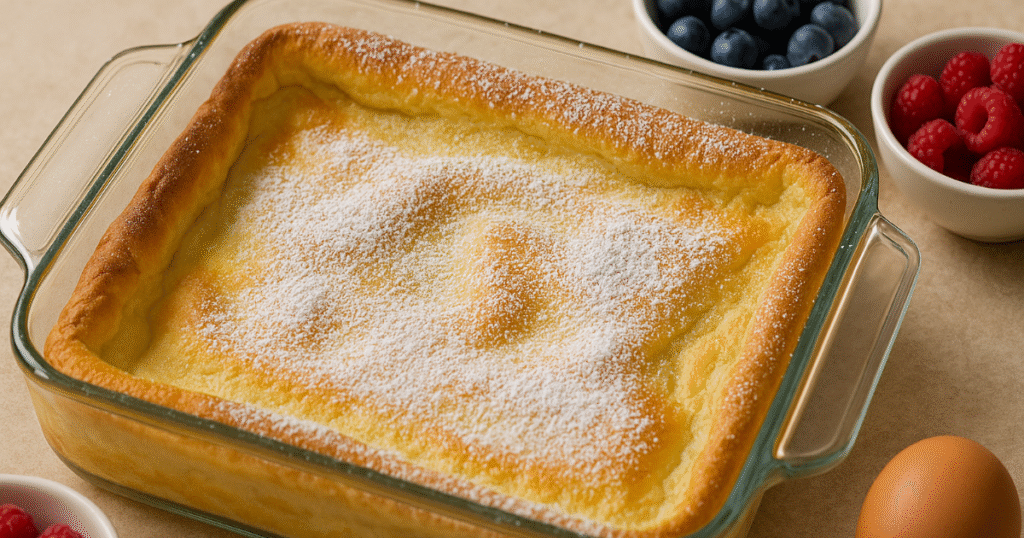
- Bake: Place dish back in the oven. Bake 20–22 minutes until puffed and golden brown. Edges should rise dramatically above the pan.
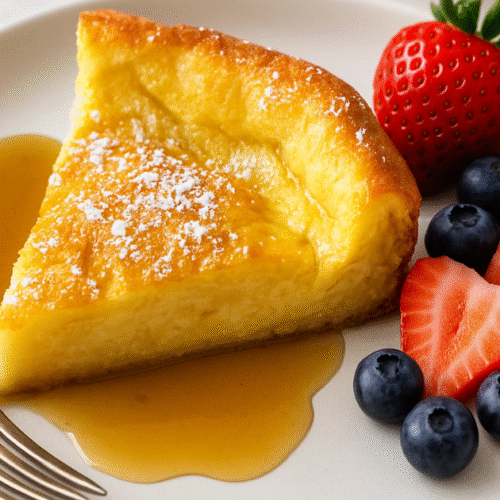
- Serve right away: Dust with powdered sugar, top with fresh fruit, drizzle with maple syrup, or enjoy plain.
Expert Tips & Mistakes to Avoid
- Hot pan = big puff. Don’t skip preheating the baking dish with butter.
- Room temperature ingredients matter. Cold eggs and milk lead to less rise.
- Don’t peek early. Opening the oven before 15 minutes can deflate the pancake.
- Serve immediately. German pancakes deflate after a few minutes—enjoy the magic moment!
- Blend thoroughly. A smooth, airy batter creates better lift.
Variations & Add-Ons
- Apple German pancake: Add thinly sliced apples sautéed in cinnamon butter before pouring the batter.
- Savory version: Skip sugar and vanilla. Add herbs, cheese, and even cooked bacon or ham.
- Cinnamon swirl: Mix 1 tsp cinnamon into batter or swirl in brown sugar butter before baking.
- Gluten-free Dutch baby: Use gluten-free flour blend. Works beautifully with the same method.
- Vegan twist: Use aquafaba and plant milk, serve with fruit and powdered sugar.
Serving Suggestions
- Dust heavily with powdered sugar and add a squeeze of lemon juice (classic German style).
- Pile on fresh fruit—berries, peaches, or sliced bananas.
- Go decadent with maple syrup and whipped cream.
- For brunch, pair with bacon, sausage, or a fruit salad.
- As dessert, top with ice cream and caramel drizzle.
Storage & Reheating
- Fridge: Store leftovers in an airtight container for up to 2 days.
- Freezer: Not ideal—texture suffers when reheated.
- Reheat: Best in a 350°F oven for 8–10 minutes. Avoid microwaving—it makes the pancake rubbery.
Nutrition Information (per serving, 6 servings)
- Calories: ~220
- Protein: 9g
- Fat: 11g
- Carbs: 22g
- Sugar: 6g
- Sodium: 180mg
- Fiber: 1g
Quick-Glance Times
- Prep Time: 10 minutes
- Cook Time: 20–22 minutes
- Total Time: 30–32 minutes
Frequently Asked Questions
Why did my German pancake not rise?
The baking dish may not have been hot enough, or the eggs and milk were too cold. Room temperature ingredients help the batter puff up properly.
Can I make a German pancake without a blender?
Yes. Whisk the eggs, milk, and flour vigorously until the batter is smooth and frothy, with no lumps. A blender just makes it faster.
What’s the difference between a German pancake and a Dutch baby?
They’re the same thing. Both names refer to an oven-baked pancake with puffy edges and a custardy center, cooked in a hot baking dish.
Can I make German pancakes ahead of time?
German pancakes are best enjoyed fresh out of the oven. You can store leftovers, but they will deflate and lose their crisp edges after baking.
Do I need a cast iron pan to make a German pancake?
No. A 9×13-inch baking dish works perfectly. A cast iron skillet gives extra-crispy edges, but any oven-safe dish will rise beautifully.
Can I double the recipe for more servings?
Yes. It’s best to bake in two separate pans rather than one oversized dish so the batter cooks evenly and still puffs up properly.
Conclusion
A German pancake recipe is the kind of dish that makes you feel like a kitchen magician without breaking a sweat. Just a quick batter, a hot baking dish, and twenty minutes later you’ve got golden, puffy perfection that looks straight out of a café.
Serve it with powdered sugar, fresh fruit, or maple syrup, and watch your family light up as they dig in. Don’t worry if it deflates after a few minutes—that’s part of the charm. The magic is in the first bite: crispy edges, custardy center, and all the flavor of a breakfast you’ll want to make again and again.
So grab your eggs, flour, and milk, preheat that oven, and give this recipe a try. And when you do, come back and let me know—what toppings did you go with?
German pancake recipe
Ingredients
- 6 large eggs room temperature, for fluffiness
- 1 cup all-purpose flour measured correctly—scoop and level
- 1 cup whole milk warm or room temp for best rise
- 2 tbsp granulated sugar adds a touch of sweetness
- 1 tsp vanilla extract flavor boost
- 1/2 tsp salt balances sweetness
- 4 tbsp unsalted butter melted in the baking dish before adding batter
- Optional toppings:
- Powdered sugar classic finish
- Fresh fruit berries, bananas, peaches, apples
- Maple syrup or honey
- Whipped cream
Instructions
- Preheat oven: Heat oven to 425°F. Place your 9×13-inch baking dish inside with 4 tbsp butter. Let the butter melt and the dish get hot.
- Blend batter: In a blender, combine eggs, flour, milk, sugar, vanilla, and salt. Blend until smooth and frothy (about 30 seconds). Batter should look thin, not thick.
- Pour the mixture: Carefully remove the hot baking dish from the oven. Swirl butter to coat, then immediately pour in the batter. You’ll hear it sizzle—that’s good!
- Bake: Place dish back in the oven. Bake 20–22 minutes until puffed and golden brown. Edges should rise dramatically above the pan.
- Serve right away: Dust with powdered sugar, top with fresh fruit, drizzle with maple syrup, or enjoy plain.
Notes
- Hot pan = big puff. Don’t skip preheating the baking dish with butter.
- Room temperature ingredients matter. Cold eggs and milk lead to less rise.
- Don’t peek early. Opening the oven before 15 minutes can deflate the pancake.
- Serve immediately. German pancakes deflate after a few minutes—enjoy the magic moment!
- Blend thoroughly. A smooth, airy batter creates better lift.