


The first time I made crawfish étouffée, I was intimidated. I grew up eating gumbo and jambalaya, but etouffee felt like a sacred Louisiana dish that only Cajun grandmothers or Creole chefs could pull off. But here’s the thing: once you understand the steps, it’s surprisingly approachable. The smell of butter, onions, bell peppers, celery, and Cajun seasonings filling your kitchen is enough to make you wonder why you haven’t been making it all along.
This is my go-to crawfish etouffee recipe—warm, spicy, comforting, and deeply flavorful. It’s the kind of dish that makes you slow down and savor every bite. In this post, I’ll walk you through all the essentials: ingredients, substitutions, step-by-step cooking directions, pro tips, mistakes to avoid, and even a few fun variations. Whether it’s your first time or your fiftieth, this dish will make you feel like you’re cooking in the heart of Louisiana.
Why You’ll Love This Recipe
- Authentic Cajun flavor: Built from the “holy trinity” of onions, bell peppers, and celery.
- Comforting yet festive: Perfect for family dinners, Mardi Gras celebrations, or weekend cooking projects.
- Flexible: Works with crawfish, shrimp, or even chicken if that’s what you have on hand.
- Beginner-friendly: Don’t worry if this is your first time—you’ll be stirring constantly with me right here beside you.
- Perfect pairing: This dish was born to be served over rice with a side of crusty bread.
If you’ve been searching for an authentic Louisiana crawfish étouffée, you’re going to love this one.
Ingredients You’ll Need
This recipe serves about 6 people. Gather these ingredients before you start cooking:
For the Base
- ½ cup (1 stick) unsalted butter – rich base for your roux.
- 1 medium onion, finely chopped – part of the “holy trinity.”
- 1 green bell pepper, finely chopped – adds sweetness and body.
- 2 celery stalks, finely chopped – balances the flavors.
- 4 cloves garlic, minced – for that Cajun punch.
For the Sauce
- ¼ cup all-purpose flour – thickens the etouffee.
- 3 cups seafood stock or chicken broth – adds depth (you can boil shrimp shells to make your own).
- 1 (10 oz) can diced tomatoes with green chilies – a little heat and acidity.
- 1 tsp paprika
- 1 tsp cayenne pepper (adjust to taste).
- 2 tsp Cajun seasonings – store-bought or homemade.
- 1 bay leaf
- Salt and pepper to taste
For the Crawfish
- 1 ½ lbs crawfish tails, peeled and cleaned – fresh or frozen.
- ½ tsp Worcestershire sauce – umami booster.
- Hot sauce, to taste – for that spicy Cajun edge.
For Serving & Garnish
- 4 cups cooked white rice – the perfect bed for etouffee.
- ½ cup green onions, sliced – garnish.
- 2 tbsp fresh parsley, chopped – garnish.
Mini tip: If you buy frozen Louisiana crawfish tails, don’t skip rinsing them gently to remove any excess crawfish season that might be too salty.
Ingredient Substitutions
- Crawfish tails → Shrimp or crab meat: Works beautifully if crawfish isn’t available.
- Seafood stock → Chicken broth: Still flavorful, especially if you add extra Cajun seasonings.
- Butter → Olive oil: For a dairy-free version, though butter gives the most authentic taste.
- All-purpose flour → Gluten-free flour blend: Keeps the roux thick and flavorful.
- Cajun seasoning → Creole seasoning: Creole has a bit more herbiness, Cajun is spicier.
Prep, Cook & Total Time
- Prep Time: 15 minutes
- Cook Time: 45 minutes
- Total Time: 1 hour
How to Make Crawfish Etouffee Recipe
Follow these steps and you’ll feel like you’re cooking straight out of Louisiana:
- Start the roux (10 minutes):
In a large heavy-bottomed pot or Dutch oven, melt the butter over medium heat. Slowly whisk in the flour, stirring constantly, until it turns a light brown color (think peanut butter shade). This is the foundation of your etouffee—don’t rush it. - Cook the holy trinity (10 minutes):
Add the onion, green bell pepper, and celery to the roux. Cook until softened, about 7 minutes, stirring occasionally. Add the garlic and cook for another minute. - Build the sauce (5 minutes):
Stir in diced tomatoes, paprika, cayenne, Cajun seasonings, bay leaf, and Worcestershire sauce. Season lightly with salt and pepper. - Add broth and simmer (15 minutes):
Slowly pour in the seafood stock while stirring constantly to avoid lumps. Bring to a gentle boil, then reduce heat and simmer until the sauce thickens, stirring occasionally. - Add the crawfish tails (5 minutes):
Stir in the crawfish tails. Let them cook just until heated through, about 5 minutes. Taste and adjust with hot sauce, pepper to taste, or more Cajun seasoning. - Serve (5 minutes):
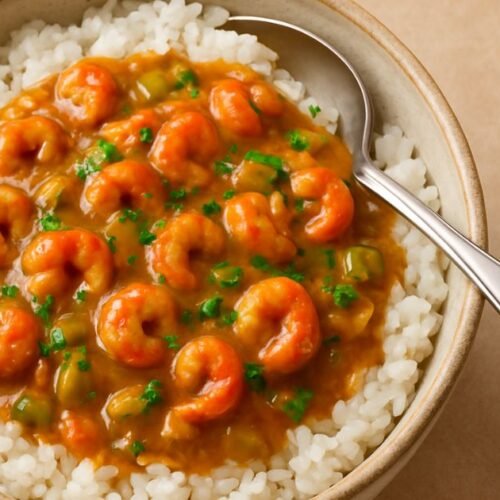
Spoon the etouffee over bowls of hot white rice. Garnish with green onions and parsley.
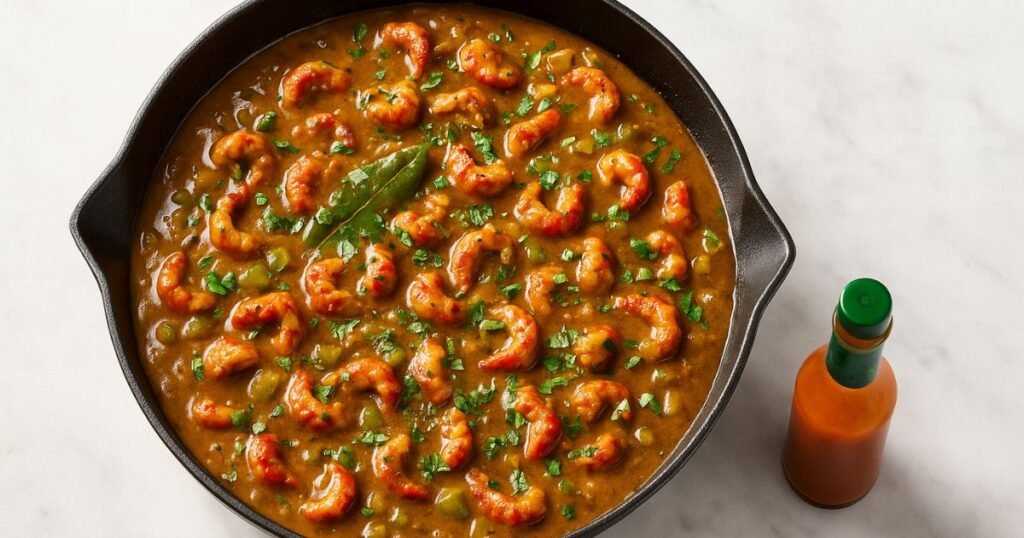
Sensory cue: The sauce should be silky, thick enough to coat the back of a spoon, and rich with the scent of onions, bell peppers, and spicy Cajun seasonings.
Expert Tips & Mistakes to Avoid
- Tip 1: Stir constantly when making the roux—burnt roux means starting over.
- Tip 2: Don’t overcook the crawfish tails—they just need to warm through or they’ll get tough.
- Tip 3: Taste as you go—seasoning builds in layers.
- Mistake to avoid: Using watery stock. A good, flavorful broth is the backbone of this dish.
- Pro hack: Make your rice ahead of time and keep it warm in the oven so you can focus on the sauce.
Variations & Add-Ons
- Shrimp Etouffee: Swap crawfish for shrimp—just as classic.
- Chicken Etouffee: Use chicken thighs for a hearty twist.
- Vegan version: Use olive oil, veggie broth, and mushrooms instead of crawfish.
- Extra heat: Add diced jalapeños with the holy trinity for a spicy Cajun version.
- Cheesy twist: Stir in a small amount of parmesan cheese at the end for richness.
Serving Suggestions
- Serve over rice—long-grain white rice is traditional.
- Add a side of crusty French bread for dipping.
- Pair with a crisp green salad to balance the richness.
- For drinks: iced tea or a cold local beer goes perfectly.
- Garnish generously with fresh parsley and sliced green onions for color.
Storage & Reheating
- Fridge: Store in an airtight container up to 3 days.
- Freezer: Freeze for up to 2 months, but note crawfish texture may change slightly.
- Reheating: Warm gently over medium heat, adding a splash of broth to loosen the sauce. Avoid high heat—it can break the sauce.
Nutrition Information (per serving, approx.)
- Calories: 420
- Protein: 22g
- Carbs: 32g
- Fat: 22g
- Sodium: 870mg
- Fiber: 3g
Frequently Asked Questions
What’s the difference between Cajun and Creole etouffee?
Cajun etouffee tends to be spicier and simpler, while Creole versions may include tomatoes and more herbs.
Can I make crawfish etouffee without crawfish?
Yes—shrimp, crab, or even chicken are delicious substitutes.
Do I have to serve etouffee over rice?
Rice is traditional, but you can also serve it with mashed potatoes or even grits.
How spicy is this recipe?
It has a mild kick, but you can adjust with cayenne pepper or hot sauce.
Can I use frozen crawfish tails?
Absolutely—just make sure they’re Louisiana crawfish tails for the most authentic flavor.
How do I thicken my etouffee if it’s too thin?
Simmer longer, or make a quick slurry of flour and water to stir in.
Conclusion
This crawfish etouffee recipe is one of those dishes that feels like a hug in a bowl. It’s rich, spicy, and deeply satisfying, whether you make it for Mardi Gras or just a cozy Sunday dinner. Don’t be intimidated—the key is patience with your roux and tasting as you go.
So, grab your onions, bell peppers, celery, and crawfish tails, and let’s bring a little Louisiana magic to your kitchen. And when you do, let me know: did you stick to the classic, or add your own twist? Either way, I promise it’ll be unforgettable.
Note: I’ve cooked this dish dozens of times, and every single time it brings people together. That’s the magic of Cajun and Creole cooking—it’s about family, friends, and sharing good food.
Crawfish Etouffee Recipe
Ingredients
- For the Base
- ½ cup 1 stick unsalted butter – rich base for your roux.
- 1 medium onion finely chopped – part of the “holy trinity.”
- 1 green bell pepper finely chopped – adds sweetness and body.
- 2 celery stalks finely chopped – balances the flavors.
- 4 cloves garlic minced – for that Cajun punch.
- For the Sauce
- ¼ cup all-purpose flour – thickens the etouffee.
- 3 cups seafood stock or chicken broth – adds depth you can boil shrimp shells to make your own.
- 1 10 oz can diced tomatoes with green chilies – a little heat and acidity.
- 1 tsp paprika
- 1 tsp cayenne pepper adjust to taste.
- 2 tsp Cajun seasonings – store-bought or homemade.
- 1 bay leaf
- Salt and pepper to taste
- For the Crawfish
- 1 ½ lbs crawfish tails peeled and cleaned – fresh or frozen.
- ½ tsp Worcestershire sauce – umami booster.
- Hot sauce to taste – for that spicy Cajun edge.
- For Serving & Garnish
- 4 cups cooked white rice – the perfect bed for etouffee.
- ½ cup green onions sliced – garnish.
- 2 tbsp fresh parsley chopped – garnish.
Instructions
- Start the roux (10 minutes):
- In a large heavy-bottomed pot or Dutch oven, melt the butter over medium heat. Slowly whisk in the flour, stirring constantly, until it turns a light brown color (think peanut butter shade). This is the foundation of your etouffee—don’t rush it.
- Cook the holy trinity (10 minutes):
- Add the onion, green bell pepper, and celery to the roux. Cook until softened, about 7 minutes, stirring occasionally. Add the garlic and cook for another minute.
- Build the sauce (5 minutes):
- Stir in diced tomatoes, paprika, cayenne, Cajun seasonings, bay leaf, and Worcestershire sauce. Season lightly with salt and pepper.
- Add broth and simmer (15 minutes):
- Slowly pour in the seafood stock while stirring constantly to avoid lumps. Bring to a gentle boil, then reduce heat and simmer until the sauce thickens, stirring occasionally.
- Add the crawfish tails (5 minutes):
- Stir in the crawfish tails. Let them cook just until heated through, about 5 minutes. Taste and adjust with hot sauce, pepper to taste, or more Cajun seasoning.
- Serve (5 minutes):
- Spoon the etouffee over bowls of hot white rice. Garnish with green onions and parsley.
Notes
- Stir constantly when making the roux—burnt roux means starting over.
- Don’t overcook the crawfish tails—they just need to warm through.
- Taste as you go—seasoning builds in layers.
- Use a flavorful stock—watery broth will make the dish bland.
- Storage: Refrigerate up to 3 days, or freeze up to 2 months (texture may change slightly).
- Reheat gently over medium heat with a splash of broth.