

I still remember the first time I cooked Cornish hens. I was a little nervous — they looked so elegant sitting in the grocery store, much fancier than regular chicken. But once I gave it a try, I realized these tiny birds were not only easy to prepare, they were also one of the most rewarding dishes I’d ever made. The skin turned out golden and crispy, the meat juicy and tender, and the whole kitchen smelled like rosemary and thyme.
If you’ve been curious about how to roast Cornish game hens at home, you’re in the right place. In this guide, I’ll walk you through my favorite Cornish hen recipe, complete with step-by-step instructions, expert tips, substitutions, and even some fun variations. Whether you’re planning a romantic dinner for two, a cozy family meal, or a holiday feast, this dish is guaranteed to impress.
Why You’ll Love This Recipe
- Simple & approachable: Despite its fancy reputation, this dish is as easy as roasting a regular chicken.
- Perfectly portioned: Each hen serves one person, making plating effortless.
- Crispy skin, juicy meat: A simple dry rub and olive oil guarantee mouthwatering results.
- Versatile flavors: Season with rosemary and thyme for a classic touch, or experiment with spices like smoked paprika.
- Restaurant-worthy at home: Impress guests with minimal effort.
Ingredients You’ll Need
Here’s everything you’ll need to bring this roasted Cornish hen recipe to life:
For the Hens
- 2 Cornish game hens (about 1 ½ pounds each), thawed if frozen
- 2 tablespoons olive oil (or melted butter for extra richness)
- 1 teaspoon salt
- ½ teaspoon black pepper
- 1 teaspoon smoked paprika (adds color and subtle smokiness)
- 1 teaspoon garlic powder
- ½ teaspoon onion powder
For the Aromatics
- 4 sprigs fresh rosemary
- 4 sprigs fresh thyme
- 1 lemon, quartered
- 4 garlic cloves, smashed
Optional Glaze
- 2 tablespoons honey or maple syrup
- 1 tablespoon soy sauce
- 1 teaspoon Dijon mustard
Tip: Use paper towels to pat the hens dry before seasoning. This step is key for crispy skin.
Ingredient Substitutions
Don’t worry if you’re missing something — this recipe is flexible.
- Herbs: Swap rosemary and thyme for sage, oregano, or even a sprinkle of Italian seasoning.
- Olive oil: Melted butter, avocado oil, or even duck fat make great substitutes.
- Smoked paprika: Try chili powder or regular sweet paprika if you prefer less smokiness.
- Cornish hens: If you can’t find them, small whole chickens (spatchcocked or halved) work too.
- Glaze: Use balsamic vinegar and honey for a tangy finish instead of Dijon mustard.
Prep, Cook, and Total Time
- Prep Time: 15 minutes
- Cook Time: 50–60 minutes
- Total Time: About 1 hour 15 minutes
How to Make Cornish Hen Recipe
Follow these steps, and you’ll have roasted Cornish hens with crispy skin and juicy meat:
- Preheat the oven: Set your oven to 400°F. Place a roasting pan or baking dish on the counter, ready to go.
- Prep the hens: Remove hens from packaging and pat them dry with paper towels. This helps the skin crisp up beautifully.
- Season generously: Rub olive oil all over each hen. Mix salt, pepper, smoked paprika, garlic powder, and onion powder, then sprinkle evenly. Don’t forget inside the cavity!
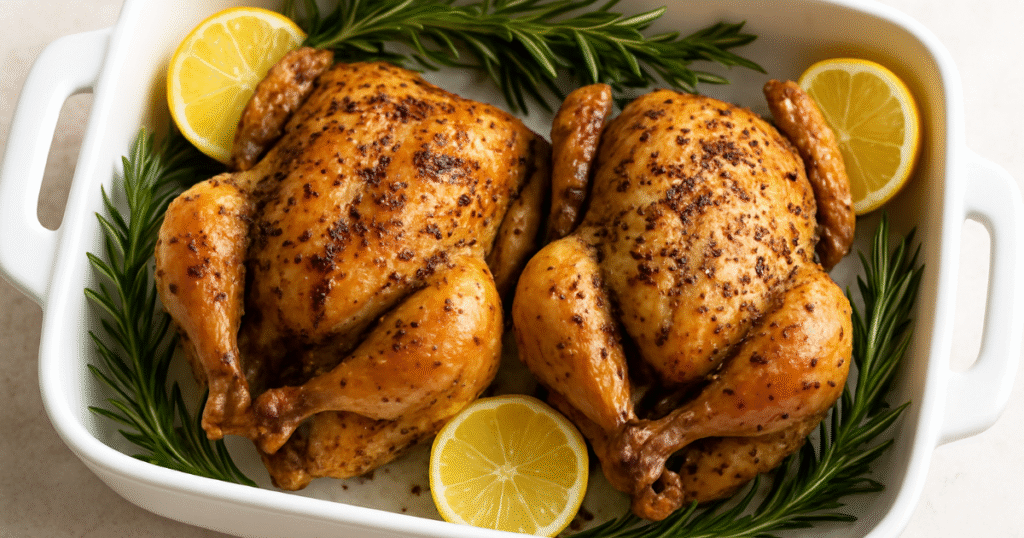
- Stuff with aromatics: Place a sprig of rosemary, thyme, a garlic clove, and a lemon wedge into each cavity. This infuses the hens with flavor as they roast.
- Tie the legs (optional): Use kitchen twine to tie the legs together. It helps the hens cook evenly and keeps the aromatics tucked inside.
- Roast: Place hens breast-side up in the roasting pan. Roast for 50–60 minutes, or until a thermometer inserted into the thickest part of the thigh registers 165°F.
- Optional glaze: Mix honey, soy sauce, and Dijon mustard. Brush onto the hens during the last 10 minutes of roasting for a glossy, caramelized finish.
- Rest before serving: Remove from oven, tent with foil, and let rest 10 minutes before carving. This keeps the juices locked in.
Expert Tips & Mistakes to Avoid
- Don’t skip drying: Moisture on the skin leads to soggy results. Paper towels are your best friend here.
- Check temperature: Always use a thermometer to check doneness. Insert it into the thickest part of the thigh without touching bone.
- Avoid over-basting: Too much liquid can soften the skin instead of crisping it. Stick with a light glaze or dry rub.
- Season well: Small birds still need bold flavor. Don’t be shy with salt and pepper.
- Resting matters: Resting for 10 minutes makes all the difference in tenderness.
Variations & Add-Ons
- Herb Butter: Mix softened butter with rosemary, thyme, and garlic. Rub under the skin before roasting.
- Spicy Kick: Add cayenne pepper or chili flakes to the dry rub.
- Citrus Twist: Use orange slices instead of lemon for a sweeter, fragrant note.
- Gluten-Free: Naturally gluten-free, just skip soy sauce or use tamari if glazing.
- Dairy-Free: Stick with olive oil instead of butter.
Serving Suggestions
Cornish hens shine when served with simple yet elegant sides:
- Roasted vegetables: Carrots, Brussels sprouts, or potatoes roasted alongside the hens.
- Wild rice or couscous: Perfect for soaking up the juices.
- Fresh salad: A crisp green salad balances the richness.
- Wine pairing: A crisp Sauvignon Blanc or light Pinot Noir works beautifully.
Storage & Reheating
- Refrigerator: Store leftovers in an airtight container for up to 3 days.
- Freezer: Freeze cooked hens (wrapped tightly) for up to 2 months. Thaw overnight in the fridge before reheating.
- Reheating: For best results, reheat in a 350°F oven until warmed through (about 20 minutes). Microwaving works in a pinch but softens the skin.
Nutrition Information (per serving, approx.)
- Calories: 480
- Protein: 48g
- Fat: 28g
- Carbohydrates: 5g
- Fiber: 1g
- Sugar: 2g
- Sodium: 600mg
Frequently Asked Questions
What is the difference between Cornish hen and regular chicken?
Cornish hens are younger, smaller chickens that cook faster and have tender, juicy meat compared to regular chicken.
How many people does one Cornish hen serve?
Typically, one Cornish hen serves one person. With hearty side dishes, you can split one between two people.
Do you cover Cornish hens when baking?
No, leave them uncovered so the skin gets crispy. Tent with foil only if the skin browns too quickly before the meat is done.
Can I cook Cornish hens from frozen?
It’s best to thaw Cornish hens overnight in the fridge. Cooking from frozen leads to uneven cooking and dry spots.
Should Cornish hens be brined?
Brining is optional, but it adds moisture and flavor. A quick 2-hour brine enhances juiciness and seasoning.
How do I know when Cornish hens are done?
Use a thermometer in the thickest part of the thigh. When it reads 165°F, the Cornish hen is fully cooked and safe to eat.
Conclusion
There’s something undeniably special about sitting down to your very own roasted Cornish hen. This recipe gives you crispy skin, juicy meat, and the kind of aroma that fills the whole house with comfort. Whether you’re hosting a dinner party or just want to treat yourself, this Cornish hen recipe proves that delicious, elegant food doesn’t have to be complicated.
So, preheat that oven, grab a roasting pan, and give this a try. And when you do, I’d love to hear how it turned out — drop a comment, share your favorite twist, or rate the recipe. Happy cooking!
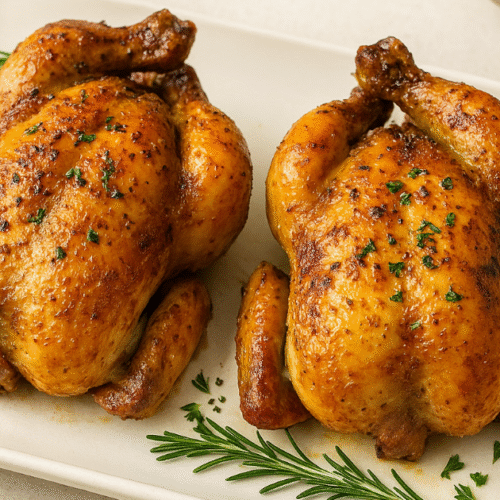
Cornish hen recipe
Ingredients
- For the Hens
- 2 Cornish game hens about 1 ½ pounds each, thawed if frozen
- 2 tablespoons olive oil or melted butter for extra richness
- 1 teaspoon salt
- ½ teaspoon black pepper
- 1 teaspoon smoked paprika adds color and subtle smokiness
- 1 teaspoon garlic powder
- ½ teaspoon onion powder
- For the Aromatics
- 4 sprigs fresh rosemary
- 4 sprigs fresh thyme
- 1 lemon quartered
- 4 garlic cloves smashed
- Optional Glaze
- 2 tablespoons honey or maple syrup
- 1 tablespoon soy sauce
- 1 teaspoon Dijon mustard
Instructions
- Preheat the oven: Set your oven to 400°F. Place a roasting pan or baking dish on the counter, ready to go.
- Prep the hens: Remove hens from packaging and pat them dry with paper towels. This helps the skin crisp up beautifully.
- Season generously: Rub olive oil all over each hen. Mix salt, pepper, smoked paprika, garlic powder, and onion powder, then sprinkle evenly. Don’t forget inside the cavity!
- Stuff with aromatics: Place a sprig of rosemary, thyme, a garlic clove, and a lemon wedge into each cavity. This infuses the hens with flavor as they roast.
- Tie the legs (optional): Use kitchen twine to tie the legs together. It helps the hens cook evenly and keeps the aromatics tucked inside.
- Roast: Place hens breast-side up in the roasting pan. Roast for 50–60 minutes, or until a thermometer inserted into the thickest part of the thigh registers 165°F.
- Optional glaze: Mix honey, soy sauce, and Dijon mustard. Brush onto the hens during the last 10 minutes of roasting for a glossy, caramelized finish.
- Rest before serving: Remove from oven, tent with foil, and let rest 10 minutes before carving. This keeps the juices locked in.
Notes
- One Cornish hen typically serves one person, but with hearty sides, you can split one between two.
- Don’t skip patting the hens dry with paper towels — it’s the secret to crispy skin.
- Use a thermometer to check doneness: the thickest part of the thigh should reach 165°F.
- Resting the hens for 10 minutes keeps the meat tender and juicy.
- Leftovers can be refrigerated up to 3 days or frozen for 2 months.