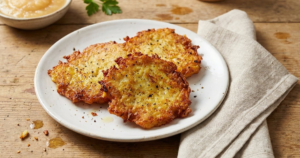


There are some recipes that feel like home the second you smell them cooking, and this potato pancake recipe is one of those for me. The first time I learned to make potato pancakes, I was standing at my neighbor’s kitchen counter, watching her grate potatoes at lightning speed while telling me, very seriously, that the secret was “getting the water out.” At the time, I nodded like I understood. I absolutely did not. My first batch was soggy, uneven, and more “potato scramble” than pancake.
But here’s the thing—potato pancakes are wonderfully forgiving. With a few smart techniques (that I’ll walk you through), they become crispy on the outside, tender in the middle, and deeply comforting.
In this post, you’ll learn how to fry the potato mixture properly, avoid common mistakes, and customize your pancakes whether you’re using russet potatoes or even leftover mashed potatoes. If you’ve ever wanted perfect potato pancakes at home, you’re in the right place.
Why You’ll Love This Recipe
- Crispy, golden brown edges with a soft, savory center
- Simple ingredients you likely already have
- Family-friendly side dish or main meal
- Flexible recipe—works with fresh potatoes or leftover mashed potatoes
- Comfort food at its best, especially with a dollop of sour cream
Ingredients You’ll Need
These ingredients may look basic, but how you use them makes all the difference.
For the Potato Mixture
- 2 lbs russet potatoes, peeled
Russets are ideal because they’re high in starch and crisp beautifully. - 1 small onion, finely grated
Potatoes and onion together create classic flavor. - 2 large eggs
- ¼ cup all-purpose flour (purpose flour)
- 1 tbsp potato starch (optional but helpful for extra crispiness)
- 1 tsp kosher salt
- ½ tsp black pepper
For Frying
- ½ cup neutral oil (vegetable or canola)
For Serving
- Green onions, sliced
- Sour cream, for topping
Ingredient Substitutions
Potato pancakes adapt well to what you have on hand.
- Leftover mashed potatoes: Mix with eggs and flour for a quicker version
- Potato starch instead of flour: Makes them extra crisp and gluten-free
- Yellow onions or shallots: Slightly sweeter flavor
- Gluten-free flour blend: Works well as a substitute for purpose flour
- Chives instead of green onions: Milder onion flavor
How to Make Potato Pancake Recipe
This process is simple, but a few details make all the difference.
1. Grate and Drain the Potatoes
Grate the peeled russet potatoes using a box grater or food processor.
Transfer to a clean kitchen towel and squeeze firmly over the sink to remove as much liquid as possible. This step prevents soggy pancakes and helps them fry up golden brown.
2. Combine the Potato Mixture
In a large bowl, mix:
- Drained potatoes
- Grated onion
- Eggs
- Flour and potato starch
- Kosher salt and black pepper
Stir until everything is evenly combined. The mixture should hold together when pressed.
3. Heat the Oil
Heat oil in a large skillet over medium-high heat.
To test readiness, drop a small bit of potato mixture into the oil. If it sizzles immediately, you’re ready to fry the potato pancakes.
4. Fry the Potato Pancakes
Scoop about ¼ cup of potato mixture per pancake into the hot oil.
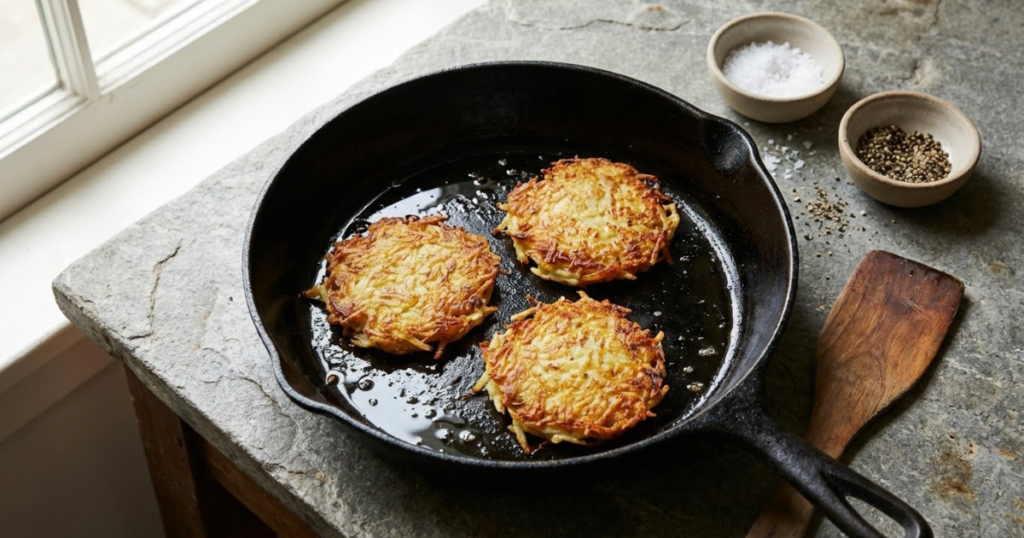
Flatten gently with a spatula and cook for 3–4 minutes per side, until deeply golden brown and crisp.
The sound will tell you when they’re ready—steady sizzling, not splattering.
5. Drain and Keep Warm
Transfer cooked pancakes to a baking sheet lined with paper towels.
Sprinkle lightly with salt while hot. Keep warm in a low oven if cooking in batches.
I always sneak one here. Quality control, right?
Expert Tips & Mistakes to Avoid
- Remove excess moisture—this is the most important step
- Don’t overcrowd the pan, or the pancakes will steam
- Use medium-high heat for crisp edges without burning
- Season immediately after frying for best flavor
- Use paper towels to absorb excess oil
Variations & Add-Ons
Potato pancakes are a perfect base for creativity.
Classic Variations
- Add grated garlic for deeper flavor
- Mix in green onions or chives
- Add a pinch of smoked paprika
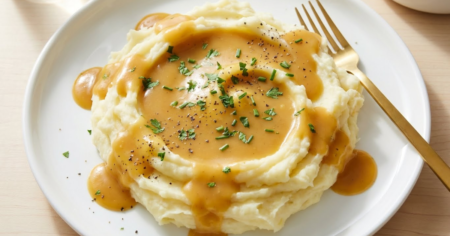
Using Mashed Potatoes
If you have leftover mashed potatoes, you can turn them into pancakes:
- Mix 2 cups mashed potatoes with 1 egg and ¼ cup flour
- Fry as usual for a softer, creamier pancake
This variation feels like a mashed potato recipe’s cooler cousin.
Serving Suggestions
Potato pancakes shine in many roles.
- Serve as a side dish with roasted chicken or pork
- Top with sour cream and green onions for a simple meal
- Pair with applesauce for a classic contrast
- Serve alongside eggs for a savory breakfast
They’re also excellent straight from the pan. No judgment here.
Storage & Reheating
Refrigerator
Store leftovers in an airtight container for up to 3 days.
Freezer
Freeze cooked pancakes between parchment layers for up to 2 months.
Reheating
Reheat in a skillet or oven at 375°F until hot and crisp. Avoid microwaving—it softens them.
Nutrition Information (Per Serving)
Approximate values (based on 4 servings):
- Calories: 320
- Protein: 8g
- Fat: 18g
- Carbohydrates: 34g
- Sugar: 2g
- Fiber: 4g
- Sodium: 520mg
Prep, Cook & Total Time
- Prep Time: 20 minutes
- Cook Time: 20 minutes
- Total Time: 40 minutes
Frequently Asked Questions
What potatoes are best for potato pancakes?
Russet potatoes are best because their high starch content creates crispy edges and fluffy centers.
Why are my potato pancakes soggy?
Soggy pancakes usually mean too much moisture. Always squeeze excess liquid from the grated potatoes before frying.
Can I bake potato pancakes instead of frying?
Yes. Bake on a greased baking sheet at 425°F, flipping once, until golden brown and crisp.
Can I make potato pancakes ahead of time?
Yes. Store cooked pancakes in the fridge and reheat in the oven or skillet to restore crispiness.
What should I serve with potato pancakes?
Potato pancakes pair well with sour cream, applesauce, roasted meats, or a fresh green salad.
Can I use leftover mashed potatoes?
Yes. Leftover mashed potatoes can be mixed with eggs and flour to make softer, creamier pancakes.
Conclusion
This potato pancake recipe is one of those timeless dishes that never goes out of style. It’s simple, comforting, and endlessly adaptable—exactly the kind of recipe you’ll come back to again and again. Whether you serve them as a side dish, a cozy dinner, or a way to use up leftover mashed potatoes, these pancakes deliver every time.
If you try this recipe, leave a comment, rate it, or share it with someone who loves crispy potatoes as much as you do. And don’t worry if your first batch isn’t perfect—mine definitely wasn’t.
Happy cooking !
Potato Pancake Recipe
Ingredients
- For the Potato Mixture
- 2 lbs russet potatoes peeled
- 1 small onion finely grated
- 2 large eggs
- ¼ cup all-purpose flour purpose flour
- 1 tbsp potato starch optional but helpful for extra crispiness
- 1 tsp kosher salt
- ½ tsp black pepper
- For Frying
- ½ cup neutral oil vegetable or canola
- For Serving
- Green onions sliced
- Sour cream for topping
Instructions
- Grate the peeled russet potatoes using a box grater or food processor.
- Transfer to a clean kitchen towel and squeeze firmly over the sink to remove as much liquid as possible.
- In a large bowl, mix:
- Drained potatoes
- Grated onion
- Eggs
- Flour and potato starch
- Kosher salt and black pepper
- Stir until everything is evenly combined. The mixture should hold together when pressed.
- Heat oil in a large skillet over medium-high heat.
- To test readiness, drop a small bit of potato mixture into the oil. If it sizzles immediately, you’re ready to fry the potato pancakes.
- Scoop about ¼ cup of potato mixture per pancake into the hot oil.
- Flatten gently with a spatula and cook for 3–4 minutes per side, until deeply golden brown and crisp.
- Transfer cooked pancakes to a baking sheet lined with paper towels.
- Sprinkle lightly with salt while hot. Keep warm in a low oven if cooking in batches.
- I always sneak one here. Quality control, right?
Notes
- Russet potatoes work best because of their high starch content.
- Removing excess moisture is key to achieving crispy potato pancakes.
- Potato starch can be used instead of flour for extra crispiness.
- Fry in batches to avoid overcrowding the pan.
- Reheat leftovers in the oven or skillet to maintain texture.