

There are nights when I want to cook—but not really cook. You know the feeling: you want something homemade and satisfying, but you also want dinner on the table before everyone starts hovering in the kitchen asking what’s taking so long. That’s exactly when I reach for my go-to pesto pasta recipe.
I’ve been making some version of pesto pasta for years, tweaking it depending on what I have on hand, who I’m feeding, and how much energy I have left at the end of the day. Sometimes it’s fully homemade pesto with fresh basil straight from the garden. Other times, it’s a really good store bought pesto and a box of my favorite pasta. Either way, it always delivers.
In this post, I’ll walk you through how to cook pesto pasta perfectly, how to avoid common mistakes, and how to customize it so it never gets boring.
Why You’ll Love This Recipe
- Fast and flexible pasta recipe perfect for busy weeknights
- Big flavor with minimal effort, thanks to pesto sauce
- Family-friendly and easy to customize with proteins or veggies
- Works with homemade pesto or store bought pesto
- Comforting but fresh, never heavy
Ingredients You’ll Need
This recipe keeps the ingredient list simple, but every piece plays an important role.
For the Pasta
- 12 oz favorite pasta
Penne, fusilli, spaghetti, or linguine all work well. - Salted water for boiling
For the Pesto Sauce
- ½ cup pesto sauce
Homemade pesto or store bought pesto both work. - ¼ cup reserved pasta water (more as needed)
- 2 tbsp extra virgin olive oil
- Salt and pepper, to taste
Optional Add-Ins
- ½ cup grated Parmesan cheese
- ¼ cup pine nuts, lightly toasted
- Fresh basil, for garnish
- Grilled chicken, shrimp, or roasted vegetables
Ingredient Substitutions
One of the best things about pesto pasta is how forgiving it is.
- Gluten-free pasta: Works perfectly—just cook carefully
- Dairy-free pesto: Use nutritional yeast instead of cheese
- Walnuts or almonds: Swap for pine nuts in homemade pesto
- Spinach or arugula: Replace part of the basil for a different flavor
- Olive oil only: Thin pesto if you don’t have enough pasta water
How to Make Pesto Pasta Recipe
This method focuses on timing and texture—nothing complicated, just smart steps.
1. Bring a Large Pot of Water to a Boil
Bring a large pot of water to a boil. Generously salt it until it tastes like the sea.
This is your only chance to season the pasta itself, so don’t be shy.
2. Cook the Pasta
Add pasta to the boiling, salted water and cook, stirring occasionally.
Focus on cooking until al dente—tender, but with a slight bite. Follow package instructions, usually 8–10 minutes.
Before draining, reserve 1 cup pasta water.
3. Prepare the Sauce Base
While the pasta cooks, add pesto sauce and extra virgin olive oil to a large bowl or skillet.
This creates a smooth base that coats the pasta evenly.
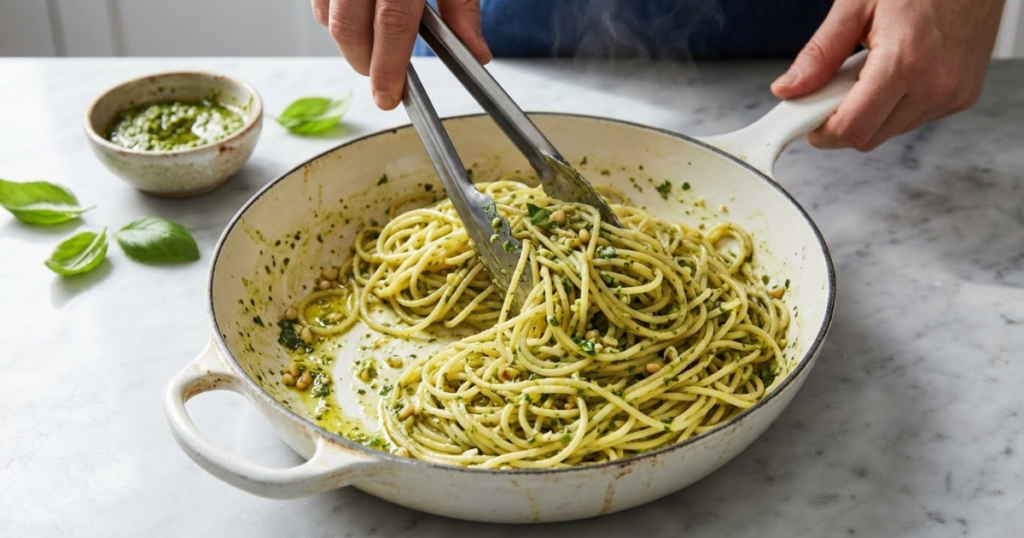
4. Combine Pasta and Pesto
Add the drained pasta directly to the pesto mixture.
Pour in ¼ cup cooking water and toss gently until the sauce loosens and clings to the pasta.
The starch in the pasta water is the secret—it transforms pesto into a silky sauce.
5. Adjust and Season
Taste and adjust with salt and pepper.
Add more pasta water a tablespoon at a time if needed. The sauce should be glossy, not dry.
6. Finish and Serve
Top with Parmesan, pine nuts, and fresh basil.
I always sneak a bite here. Quality control, right?
Expert Tips & Mistakes to Avoid
- Don’t rinse your pasta—you’ll lose the starch needed for the sauce
- Never heat pesto directly over high heat; it dulls the flavor
- Use pasta water, not plain water, to thin the sauce
- Add pesto off the heat to keep it vibrant and fresh
- Season at the end, since pesto and cheese already contain salt
Variations & Add-Ons
Pesto pasta is endlessly customizable.
Protein Additions
- Grilled chicken slices
- Sautéed shrimp
- Crispy pancetta
Vegetable Add-Ins
- Roasted cherry tomatoes
- Zucchini or asparagus
- Spinach stirred in at the end
Flavor Twists
- Lemon zest for brightness
- Red pepper flakes for heat
- Burrata or fresh mozzarella for creaminess
Serving Suggestions
Serve pesto pasta as:
- A main dish with a side salad
- A side dish alongside grilled meats
- A potluck favorite (it travels well)
I love serving it family-style in a big bowl with extra cheese on the table.
Storage & Reheating
Refrigerator
Store leftovers in an airtight container for up to 3 days.
Reheating
Reheat gently on the stove with a splash of water or olive oil.
Avoid the microwave if possible—it can dull the fresh basil flavor.
Nutrition Information (Per Serving)
Approximate values (based on 4 servings):
- Calories: 520
- Protein: 15g
- Fat: 24g
- Carbohydrates: 58g
- Sugar: 4g
- Fiber: 3g
- Sodium: 480mg
Prep, Cook & Total Time
Total Time: 25 minutes
Prep Time: 10 minutes
Cook Time: 15 minutes
Frequently Asked Questions
Can I use store bought pesto?
Yes. A good-quality store bought pesto works great and saves time. Just add pasta water to loosen the sauce.
Why is my pesto pasta dry?
Pesto pasta becomes dry when there isn’t enough pasta water. Add reserved pasta water a little at a time to create a silky sauce.
Can I make pesto pasta ahead of time?
Yes, but pesto pasta is best fresh. Reheat gently with a splash of water or olive oil to restore moisture.
What pasta works best with pesto?
Short pasta shapes like penne or fusilli hold pesto sauce well, but long pasta like spaghetti or linguine also works.
Can I freeze pesto pasta?
Freezing pesto pasta isn’t ideal because fresh basil loses flavor. Freezing pesto alone works better.
Is pesto pasta served hot or cold?
Pesto pasta can be served hot or cold. It’s delicious warm or chilled as a pasta salad.
Conclusion
This pesto pasta recipe is one of those dishes that earns a permanent spot in your rotation. It’s quick, flexible, and full of fresh flavor—exactly what you want when you need a reliable meal that still feels special. Whether you make homemade pesto from scratch or grab a jar from the store, the result is comforting, satisfying, and endlessly adaptable.
If you try it, leave a comment, rate the recipe, or share it with someone who loves pasta as much as you do. And remember—don’t stress if it’s not perfect the first time. Mine definitely wasn’t.
Happy cooking 🌿🍝
Pesto Pasta Recipe
Ingredients
- For the Pasta
- 12 oz favorite pasta
- Salted water for boiling
- For the Pesto Sauce
- ½ cup pesto sauce
- ¼ cup reserved pasta water more as needed
- 2 tbsp extra virgin olive oil
- Salt and pepper to taste
- Optional Add-Ins
- ½ cup grated Parmesan cheese
- ¼ cup pine nuts lightly toasted
- Fresh basil for garnish
- Grilled chicken shrimp, or roasted vegetables
Instructions
- Bring a large pot of water to a boil. Generously salt it until it tastes like the sea.
- Add pasta to the boiling, salted water and cook, stirring occasionally.
- Focus on cooking until al dente—tender, but with a slight bite. Follow package instructions, usually 8–10 minutes.
- Before draining, reserve 1 cup pasta water.
- While the pasta cooks, add pesto sauce and extra virgin olive oil to a large bowl or skillet.
- Add the drained pasta directly to the pesto mixture.
- Pour in ¼ cup cooking water and toss gently until the sauce loosens and clings to the pasta.
- Taste and adjust with salt and pepper.
- Add more pasta water a tablespoon at a time if needed. The sauce should be glossy, not dry.
- Top with Parmesan, pine nuts, and fresh basil.
- I always sneak a bite here. Quality control, right?
Notes
- Always reserve pasta water before draining to help loosen and emulsify the pesto sauce.
- Add pesto off the heat to preserve the fresh basil flavor.
- Do not rinse the pasta, as the starch helps the sauce cling.
- Store bought pesto works well, but homemade pesto offers brighter flavor.
- Pesto pasta is best served fresh but can be gently reheated with added moisture.