

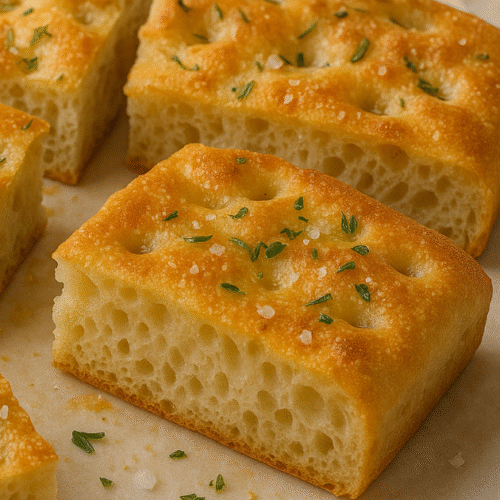
The first time I tried baking a sourdough focaccia recipe, I was honestly a little nervous. Sourdough felt intimidating—like only professional bakers or that one friend who names their starter could pull it off. But I’ll never forget pulling my first golden loaf from the oven. The crackle of the crust, the soft airy crumb, the aroma of rosemary and extra virgin olive oil—it was pure magic.
Unlike a traditional sourdough bread loaf, focaccia is forgiving. It doesn’t need fancy scoring or bannetons. You let the dough rise in a baking pan, drizzle it generously with tablespoons of olive oil, sprinkle flaky sea salt, and let the oven do its magic. The result? Crispy edges, pillowy insides, and the perfect canvas for herbs, toppings, or just dipping into more olive oil.
In this post, I’ll walk you through everything: ingredients, step-by-step directions, smart tips, and fun variations. Whether you’re brand new to sourdough or looking to expand your sourdough bread repertoire, this focaccia will be your new favorite.
Why You’ll Love This Recipe
- Beginner-Friendly: No special tools, just a bowl, parchment paper, and a baking pan.
- Deliciously Versatile: Works as a side dish, sandwich base, or snack.
- Deep Flavor: Made with an active sourdough starter for natural fermentation.
- Golden & Crispy: Olive oil and sea salt create a crunchy crust with a soft interior.
- Flexible Timing: The dough rises slowly, so you can fit it into your day.
If you’ve been hunting for a simple focaccia bread recipe that delivers bakery-quality results at home, this is it.
Ingredients You’ll Need
For the Focaccia Dough:
- 500g (about 4 cups) all-purpose flour (or bread flour for extra chew)
- 375g (1 1/2 cups + 1 tbsp) water, room temperature
- 100g (about 1/2 cup) active sourdough starter (fed and bubbly)
- 10g (2 teaspoons) salt
- 30g (2 tablespoons) extra virgin olive oil
For Topping:
- 2–3 tablespoons olive oil (for drizzling)
- 1–2 teaspoons flaky sea salt
- 2 tablespoons fresh rosemary leaves
Optional add-ins: cherry tomatoes, caramelized onions, olives, or garlic cloves for extra flavor.
Ingredient Substitutions
- Flour → Use 50/50 whole wheat and all-purpose for nuttier flavor.
- Olive oil → Swap with avocado oil for a lighter taste.
- Rosemary → Try thyme, sage, or oregano if that’s what you have on hand.
- Sourdough starter → If you don’t have one, use 1 packet of instant yeast and reduce the water slightly.
- Salt → Regular kosher salt works, though flaky sea salt gives the best crunch.
How to Make Sourdough Focaccia Recipe
- Mix the dough (Morning/Day 1): In a large bowl, add the flour, water, and sourdough starter. Stir until just combined. Add the salt and olive oil. Mix until a sticky dough forms.
- Stretch & fold (Over 2–3 hours): Every 30 minutes, perform a set of stretching and folding. Wet your hands, grab one edge of the dough, stretch it up, and fold it over. Rotate the bowl and repeat 4 times. This builds gluten without kneading.
- Bulk fermentation (4–6 hours at room temperature): Cover the bowl with a towel or plastic wrap and let the dough rise until puffy and doubled in size. Timing may vary depending on room temperature.
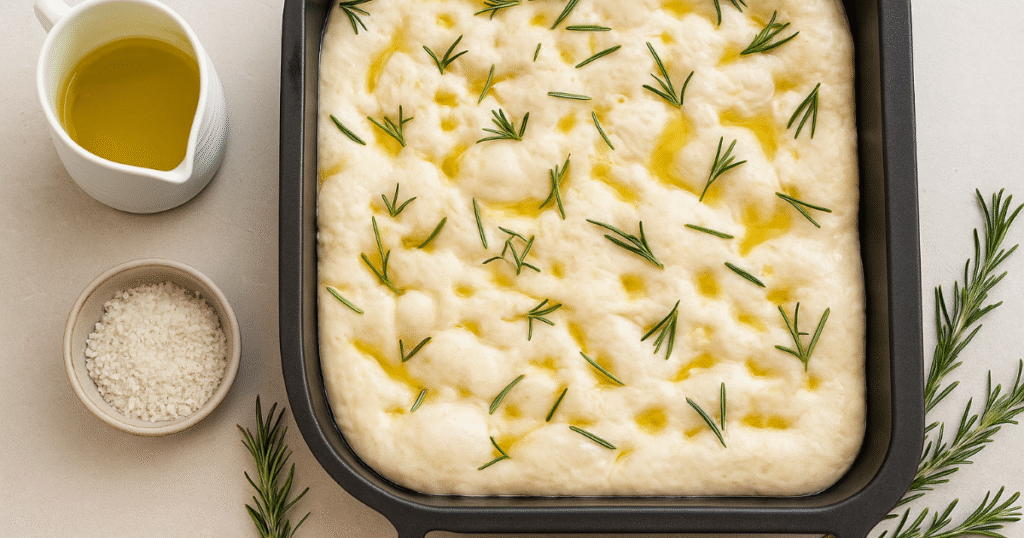
- Transfer to pan: Line a baking pan (9×13-inch or similar) with parchment paper and drizzle 2 tablespoons of olive oil. Gently pour the focaccia dough into the pan. Use oiled hands to stretch it toward the edges.
- Final proof (1–2 hours): Cover loosely and let the dough rise again until airy and bubbly.
- Dimple the dough: Preheat oven to 425°F (220°C). Use your fingertips to press deep dimples into the dough. Drizzle more olive oil on top, sprinkle with flaky sea salt and rosemary.
- Bake the focaccia: Bake for 25–30 minutes, until golden brown and crisp on the edges.
- Cool slightly & enjoy: Let rest for at least 10 minutes before slicing (if you can resist!).
Expert Tips & Mistakes to Avoid
- Use an active starter: Your sourdough starter should be bubbly and doubled before mixing.
- Don’t skip the olive oil: It’s essential for flavor and that signature crispy crust.
- Be patient with rising: Focaccia dough rises slowly—trust the bubbles, not the clock.
- Avoid overbaking: The bottom should be crisp but not burnt.
- Generous dimpling: Push your fingers all the way down; this helps trap the olive oil and toppings.
Variations & Add-Ons
- Garlic Focaccia: Add roasted garlic cloves into the dough or scatter on top.
- Tomato Focaccia: Press halved cherry tomatoes into the dimples before baking.
- Olive & Herb: Kalamata olives + oregano for a Mediterranean twist.
- Cheesy Focaccia: Sprinkle shredded mozzarella or parmesan before baking.
- Sweet Version: Top with grapes, sugar, and rosemary for an Italian-style treat.
Serving Suggestions
- Serve warm with extra virgin olive oil and balsamic vinegar for dipping.
- Use as the base for a sourdough pizza—slice horizontally and top with sauce and cheese.
- Slice into squares for sandwiches or paninis.
- Pair with soups, salads, or a big Italian dinner spread.
Storage & Reheating
- Room temp: Wrap in parchment paper and keep in a bread bag for 2 days.
- Fridge: Store in an airtight container for up to 5 days.
- Freezer: Slice and freeze for up to 2 months. Reheat directly from frozen at 350°F for 10 minutes.
- Reheating: Best warmed in the oven or toaster oven to bring back the crisp edges.
Nutrition Information (per serving, 12 servings)
- Calories: ~210
- Protein: 5g
- Fat: 6g
- Carbohydrates: 35g
- Fiber: 2g
- Sodium: 250mg
(Approximate values, may vary based on toppings and flour choice.)
Quick Time Guide
- Prep Time: 30 minutes (active time, plus resting)
- Cook Time: 30 minutes
- Total Time: About 8–10 hours (including rises)
Frequently Asked Questions
Can I make sourdough focaccia overnight?
Yes! Let the dough rise in the fridge overnight after bulk fermentation, then bring to room temp before baking.
Do I need bread flour or is all-purpose okay?
All-purpose flour works great, though bread flour gives slightly more chew to your focaccia.
Why is my focaccia dense?
Dense focaccia is usually caused by under-proofing. Let the dough rise until airy and bubbly before baking.
Can I use dried herbs instead of fresh rosemary?
Yes, but reduce the amount—use about 1 teaspoon dried herbs for every tablespoon of fresh rosemary.
How do I know when focaccia is done baking?
The top should be golden, and the bottom should sound hollow when tapped. Bake for 25–30 minutes at 425°F.
Can I freeze baked sourdough focaccia?
Yes. Slice and freeze in portions for up to 2 months. Reheat at 350°F for 10 minutes to revive the crisp edges.
Conclusion
Baking a homemade sourdough focaccia recipe is one of those experiences that feels both simple and special. With just flour, water, olive oil, and your bubbly starter, you can create a golden, dimpled bread that’s as beautiful as it is delicious. It’s forgiving, flexible, and endlessly customizable—perfect for weeknight dinners, weekend projects, or impressing friends at a potluck.
So grab your active starter, drizzle on that extra virgin olive oil, and give this recipe a try. Don’t worry if your first attempt isn’t perfect—mine definitely wasn’t! But trust me, once you taste that crispy, airy bite, you’ll be hooked.
If you try this sourdough focaccia, let me know in the comments how it turned out. Did you go classic with rosemary, or add your own twist? I can’t wait to hear your version.
Happy baking, and don’t forget: sneaking the corner piece is always fair game for the baker.
Sourdough focaccia recipe
Ingredients
- For the Focaccia Dough:
- 500 g about 4 cups all-purpose flour (or bread flour for extra chew)
- 375 g 1 1/2 cups + 1 tbsp water, room temperature
- 100 g about 1/2 cup active sourdough starter (fed and bubbly)
- 10 g 2 teaspoons salt
- 30 g 2 tablespoons extra virgin olive oil
- For Topping:
- 2–3 tablespoons olive oil for drizzling
- 1–2 teaspoons flaky sea salt
- 2 tablespoons fresh rosemary leaves
- Optional add-ins: cherry tomatoes caramelized onions, olives, or garlic cloves for extra flavor.
Instructions
- Mix the dough (Morning/Day 1): In a large bowl, add the flour, water, and sourdough starter. Stir until just combined. Add the salt and olive oil. Mix until a sticky dough forms.
- Stretch & fold (Over 2–3 hours): Every 30 minutes, perform a set of stretching and folding. Wet your hands, grab one edge of the dough, stretch it up, and fold it over. Rotate the bowl and repeat 4 times. This builds gluten without kneading.
- Bulk fermentation (4–6 hours at room temperature): Cover the bowl with a towel or plastic wrap and let the dough rise until puffy and doubled in size. Timing may vary depending on room temperature.
- Transfer to pan: Line a baking pan (9×13-inch or similar) with parchment paper and drizzle 2 tablespoons of olive oil. Gently pour the focaccia dough into the pan. Use oiled hands to stretch it toward the edges.
- Final proof (1–2 hours): Cover loosely and let the dough rise again until airy and bubbly.
- Dimple the dough: Preheat oven to 425°F (220°C). Use your fingertips to press deep dimples into the dough. Drizzle more olive oil on top, sprinkle with flaky sea salt and rosemary.
- Bake the focaccia: Bake for 25–30 minutes, until golden brown and crisp on the edges.
- Cool slightly & enjoy: Let rest for at least 10 minutes before slicing (if you can resist!).
Notes
- Use an active starter: Your sourdough starter should be bubbly and doubled before mixing.
- Don’t skip the olive oil: It’s essential for flavor and that signature crispy crust.
- Be patient with rising: Focaccia dough rises slowly—trust the bubbles, not the clock.
- Avoid overbaking: The bottom should be crisp but not burnt.
- Generous dimpling: Push your fingers all the way down; this helps trap the olive oil and toppings.
Do you want me to also convert this extraction into a clean, printable recipe card format that w